The Chinese rear-view mirror: how Brazil slipped back into the red on cars
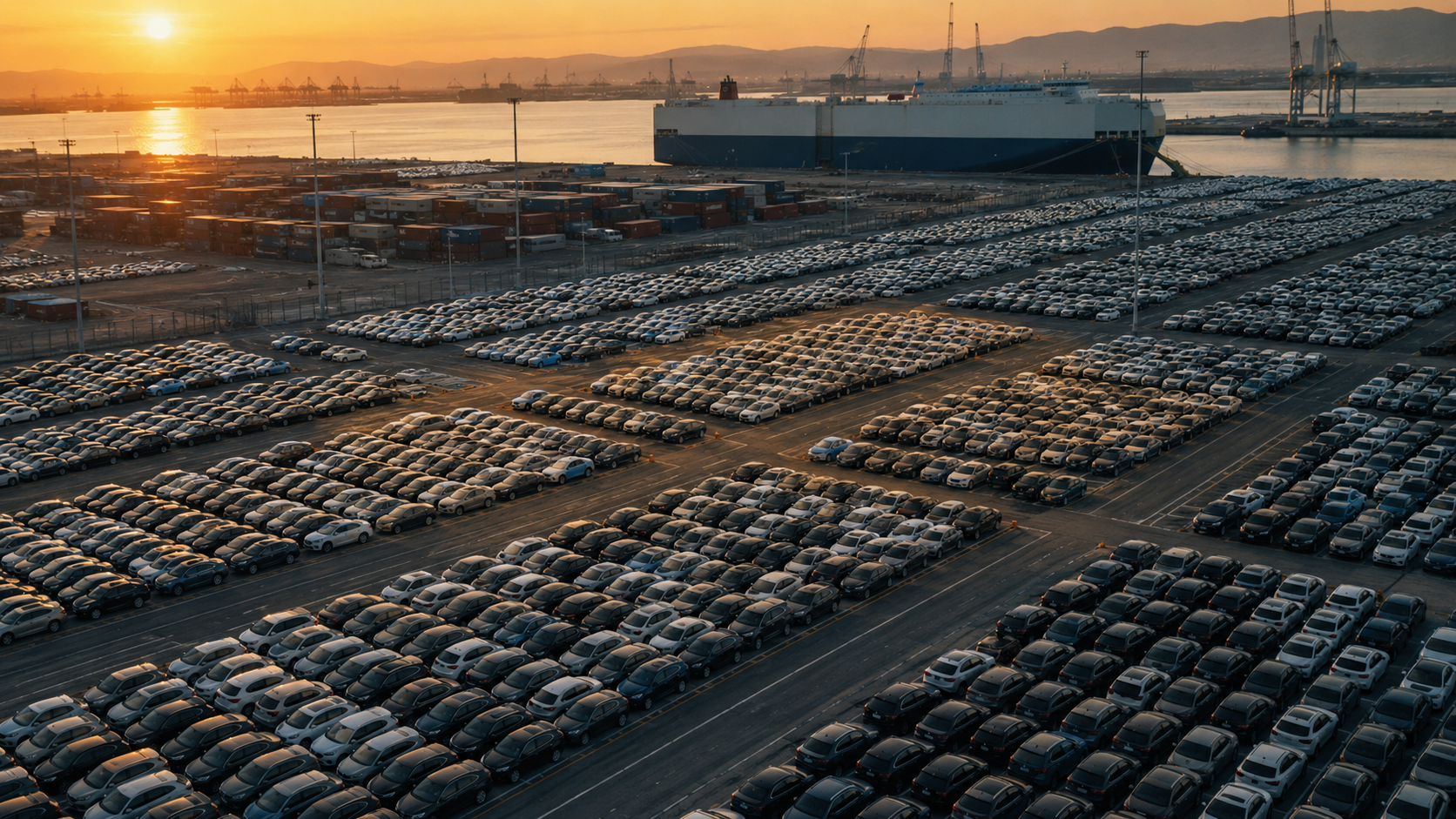
In 2016, Brazil sold more cars to the world than it bought. A decade later, the sign has flipped. First-half 2026 figures, released by Anfavea on 7 July, confirm what the ports had been signalling for months: between January and June the country imported 280,600 vehicles, roughly 63,000 units more than it exported, and the automotive trade balance slid back into deficit for the first time in twelve years.
The headline number is striking on its own, but it tells only half the story. What makes the result structurally significant is not the negative balance itself, but the combination of three simultaneous movements: a flood of imports of increasingly concentrated origin, a collapse in exports, and a fiscal policy that, for six additional months, kept open the very door the industry wanted shut.
The geography of imports has changed
In 2025, China already accounted for 37.6% of imported vehicles registered in Brazil, enough to displace the traditional Mercosur-Mexico axis from the top of the import ranking for the first time. In the first half of 2026, half of the imported volume came from the Asian country. Over twelve months, Chinese shipments to the Brazilian market doubled, jumping from 70,000 to 140,000 units.
Speed matters more than the level. Few exporting sectors manage to double their presence in a continental-scale market within a single year, and the explanation lies less in Brasília than in Beijing. China's new-energy vehicle industry now operates with an overcapacity acknowledged even by its own authorities, who have begun warning carmakers against "disorderly" price wars. The European Union Chamber of Commerce in China estimates that sectors such as electric vehicles, batteries and solar panels produce several times more than domestic and foreign markets can absorb. The surplus needs an outlet, and Brazil, with import tariffs historically below the global average, has become one of them.
The other side of the ledger: exports are melting
If imports explain the numerator of the deficit, exports explain the denominator. Over the half-year, Brazilian shipments totalled 216,600 units, a 21.2% drop from the same period in 2025. Anfavea's full-year projection, which in January pointed to a 1.5% rise, was revised to a 12.8% contraction.
The dominant factor here is not China, but Argentina. For the neighbouring market alone, the reduction was nearly 60,000 vehicles, a reflection of the country's economic contraction and the loss of ground by Brazilian models to Chinese and Mexican rivals. It is a double exposure: the domestic product loses market share at home to the subsidised import and loses abroad to the same competitors, aggravated by the "Brazil cost" embedded in every unit shipped.
The point that usually escapes a hurried reading is that national production, paradoxically, is growing. The industry built 1.372 million vehicles in the half-year, up 8.8% and the best performance for the period since 2019. The domestic market is buoyant, with car sales rising 23.7%. The problem is not weak demand; it is the share of that demand being captured by imports rather than by assembly lines installed across nine states.
Fiscal policy at the centre of the dispute
This is where the political core of the episode lies. The schedule for restoring import taxes was drawn up back in 2023: tariffs on electric and hybrid vehicles would rise gradually until reaching 35% in July 2026, with temporary exemption quotas to allow carmakers to transition toward local production. The design was coherent, predictable and negotiated with the sector.
The friction came with the extension. The quotas for importing knocked-down kits, originally set to expire in February 2026, were renewed by the government for another six months, through the end of June, with full import-tax exemption for models under the CKD and SKD regimes, within a ceiling of US$463 million. It was this move that provoked Anfavea's sharpest reaction. The association's president, Igor Calvet, lamented that part of the market's recovery is being captured by imports incentivised by below-average tariffs or by SKD assembly of electrified vehicles exempt from import tax, something he described as unnecessary given the strong commercial performance of electrified models themselves.
The industry's criticism is legitimate, but it is worth situating precisely. This is not a policy reversal that "created" the deficit overnight, nor an unprecedented favour. It is the extension, by half a year, of an originally temporary benefit, at a moment when China's global surplus is pressuring every open market at once. Some see the measure as a transition mechanism giving carmakers breathing room to complete their local plants; others see a sign of regulatory unpredictability that undermines the confidence of those who already invested counting on the original calendar. Both readings find support in the facts.
What the number really signals
The 2026 deficit is less a verdict on any particular government than a stress test on a model of industrial policy. Brazil faces, at the same time, a trading partner willing to export deflation via overcapacity, a neighbour in contraction that was its main export destination, and a domestic choice about the pace and conditions under which to open the door to imported electrification.
The comparison with Europe is instructive. Brussels chose to condition access to subsidies and benefits on local-content and domestic-assembly commitments, rather than on direct barriers. Brazil, with its regime of quotas and gradual re-tariffing, is feeling its way toward a similar path, with the difference that execution has wavered, and each wobble costs predictability. The negative balance is, in this sense, the accounting price of a strategic indecision. The question the coming half-years will answer is not whether China will keep exporting its surplus, that is all but certain, but whether Brazil will have built, by then, a local industry capable of competing with it rather than merely assembling it.
