The fifth engine: when an airliner carried its own spare part
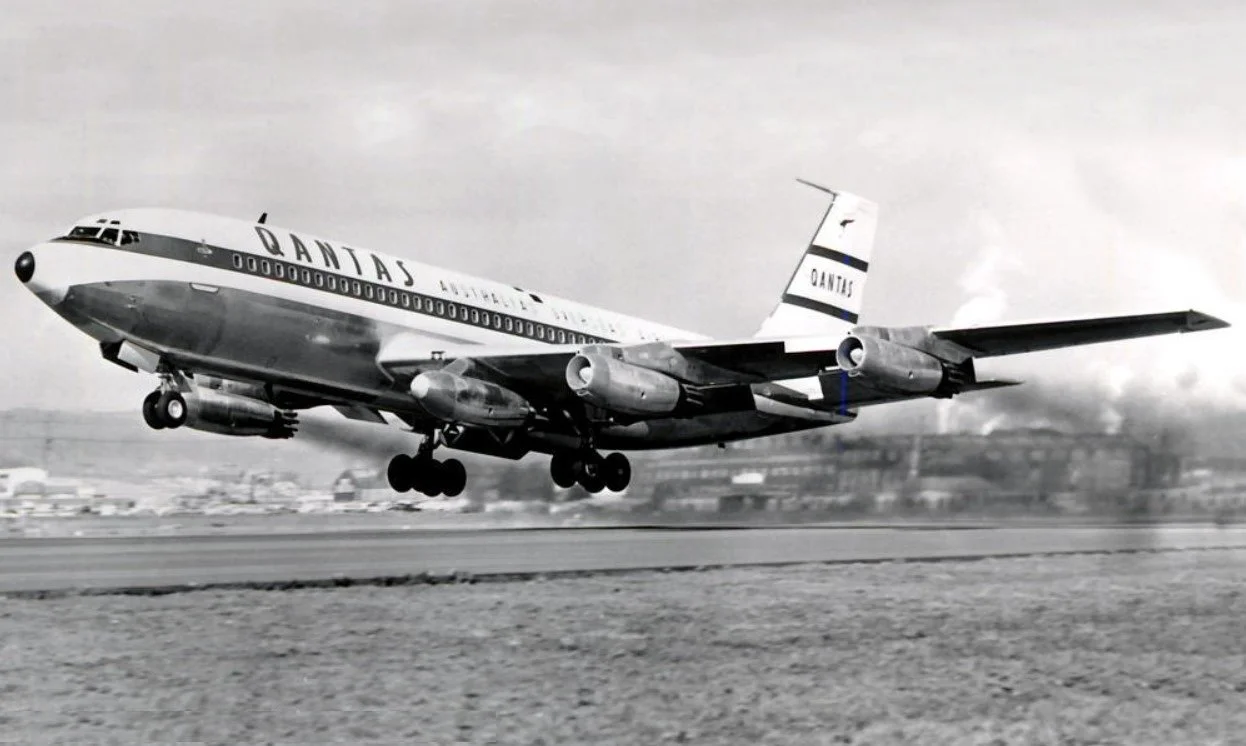
here is a Qantas photograph from the early jet age in which a Boeing 707 appears to have one engine too many. It is not an optical illusion, nor a retouch. Mounted under the left wing, between the fuselage and the innermost engine, sits a genuine fifth engine. It does not spin, produces no thrust, and is connected to nothing. It is cargo. And in that strange sight lies one of the most ingenious, and least known, logistical solutions in commercial aviation.
The problem this configuration solved was mundane and expensive. In the late 1950s, jet engines were less reliable than they are today, and the odds of an in-flight failure were significant. When an aircraft became stranded at a distant airport with a dead engine, the airline faced a poor set of choices: charter a freighter to fly the replacement part in, or ship it by sea. The first option was costly. The second could take weeks. In both cases, the grounded aircraft kept sitting still, draining revenue.
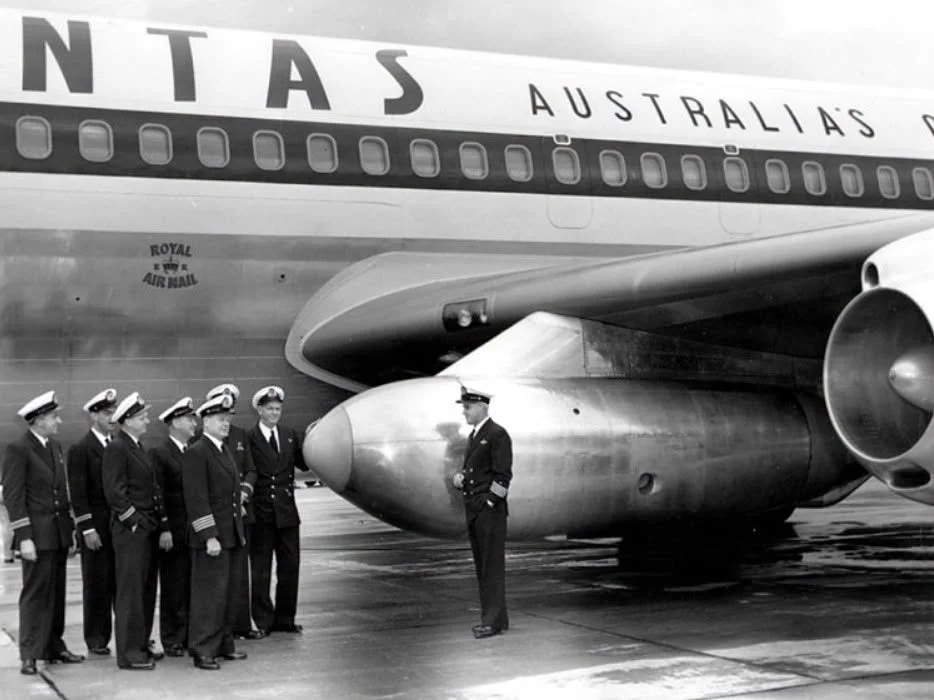
Qantas tends to present itself as the pioneer of the technique, having begun carrying a fifth engine on its Boeing 707s as early as 1959, the year it took delivery of its first aircraft of the type. The ingenuity lay in turning the airliner itself into the transporter of the part. The wing was fitted with anchor points that allowed a structural strut to be attached beneath it, and the replacement engine was winched up and bolted into place, quietly converting a scheduled commercial flight into a rescue operation in disguise.
Physics imposed conditions. An extra engine hanging off one side alone is an invitation to imbalance. The answer was position. Because the mounting sits so close to the fuselage, the weight of the engine falls near enough to the center of gravity that it causes no balance problem, though it does increase drag and fuel burn. To reduce that drag, the engine traveled partly disassembled. The fan blades were removed and fairings added, giving the part an aerodynamic contour rather than the open, hungry face of a turbine in operation.
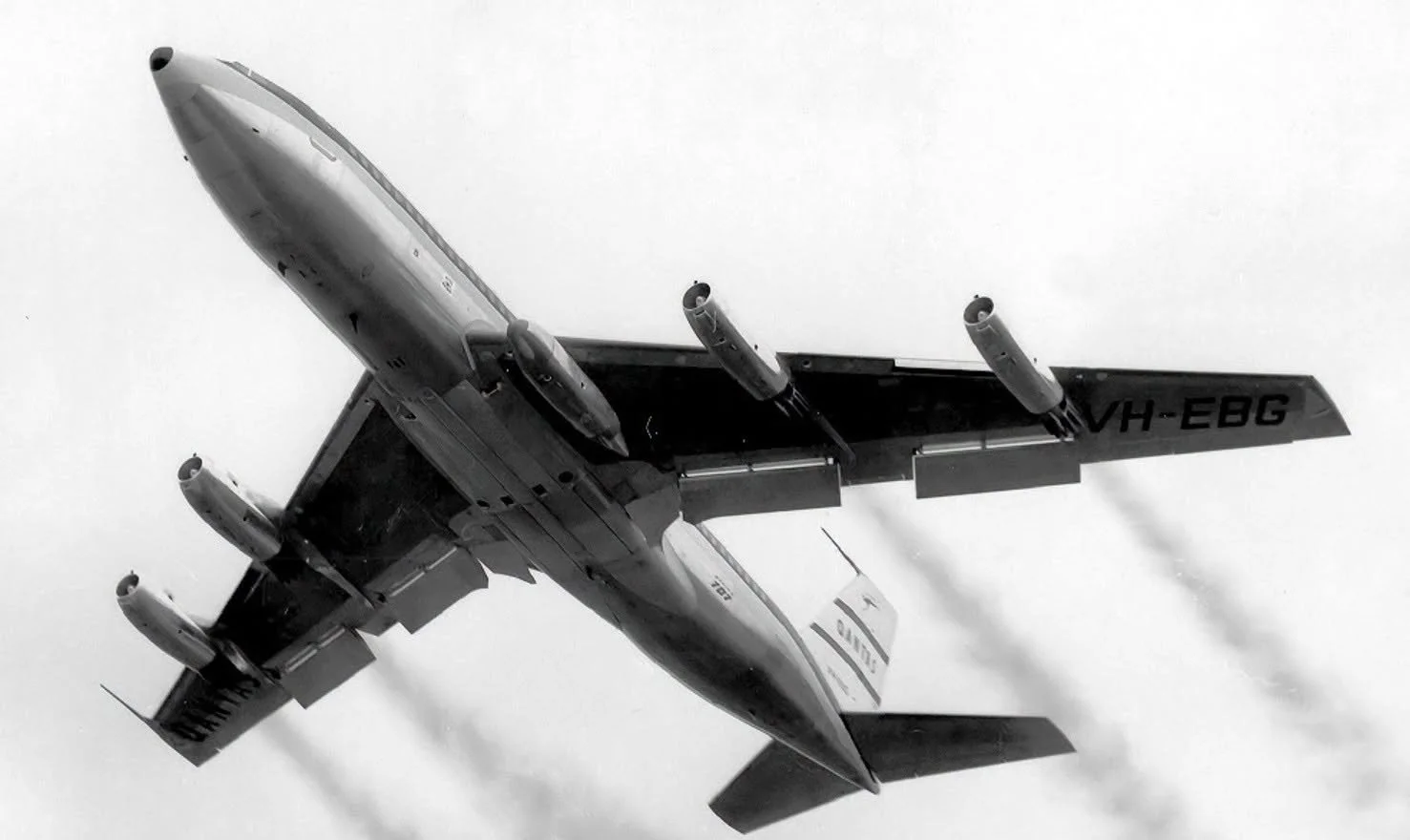
The rest was crew competence. The added drag caused by air flowing around the spare engine in flight was countered by the pilots on the flight controls, keeping the aircraft straight, level and safe. They flew a little slower, with fine trim adjustments, and arrived with the part ready for installation. All the personnel and tooling required could travel on the same flight, keeping the entire operation under the airline's control.
The practice was never a Qantas monopoly, even if the Australian carrier is its most famous face. Several older aircraft, including the DC-8 and the 707 itself, carried this fifth pod to transport spare engines. The Vickers VC10 and the DC-10 had variations on the same idea. And the capability survived the transition to widebodies. In 1971, South African Airways took delivery of its first Boeing 747, registration ZS-SAN, with a fifth engine fitted straight from the factory, because there were no spare engines for the aircraft in South Africa and no cargo plane able to easily carry a fully assembled 747 engine to where it was needed.
The detail that closes the story is its longevity. The technique spanned decades and outlived the very engine improvements that had made it necessary. For Qantas, the last occurrence was in 2016, when a Boeing 747-400 was stranded in Johannesburg in need of a replacement engine. Flight QF63 routed from Sydney to Perth to refuel before continuing on to Johannesburg, and the passengers on board were told of the flight's unusual nature the night before or at check-in. Looking out the window, they saw three engines on one side and two on the other.
There is a lesson here that reaches beyond aviation. The most elegant solution to an expensive problem is rarely the most technological one. It is the one that uses what already exists in a way no one had thought of. An airliner, already headed to the right place, carrying its own cure under the wing. When the fifth engine finally vanished from the skies, it was not because someone invented something better. It was because engines began failing too rarely to justify the ingenuity.
