The Three Airspace Voids
How Geopolitical Risk Reshapes Global Aviation and Costs
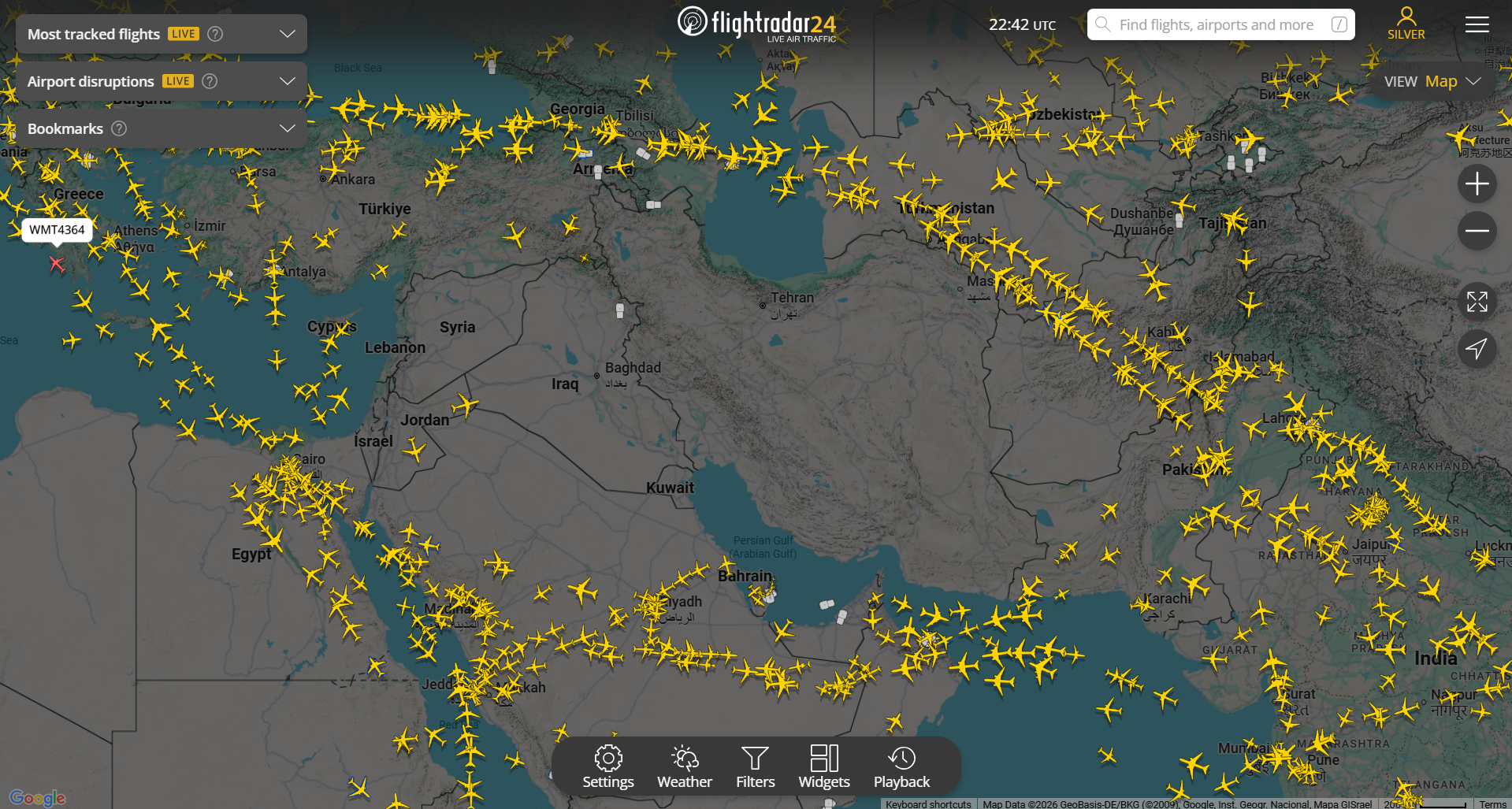
Open a live global flight map at any given moment and you will see thousands of aircraft crossing Europe, the Mediterranean, the Middle East and South Asia in dense, highly optimized corridors. The system appears fluid, efficient and interconnected. Yet three large voids immediately stand out: Ukraine, parts of Iran and its surrounding region, and Afghanistan. These empty zones are not random gaps in coverage. They are geopolitical fault lines made visible in real time.
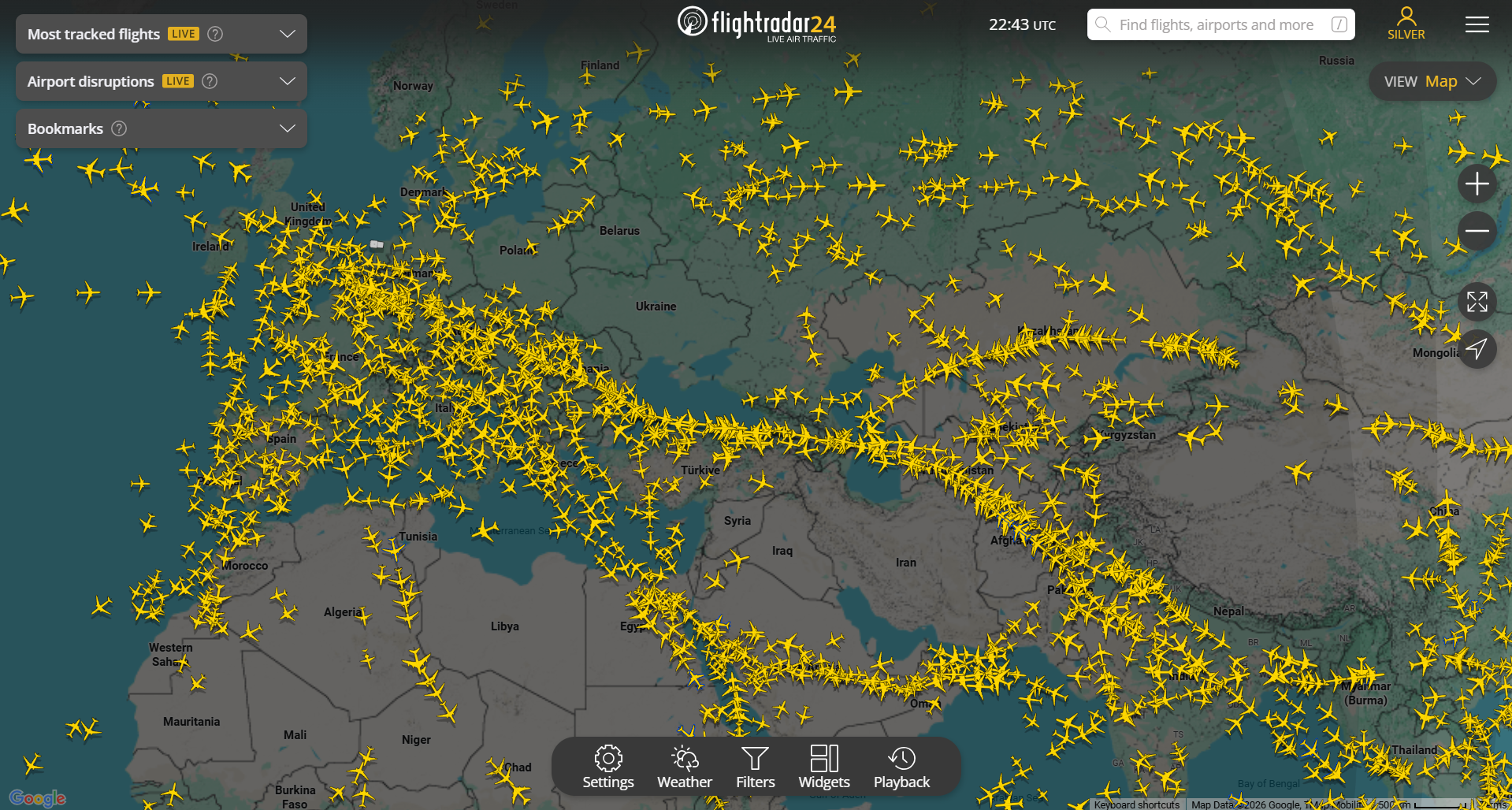
The closure of Ukrainian airspace since 2022 represents one of the most consequential structural shifts in Eurasian aviation in decades. Before the war, Ukraine formed a key corridor linking Western Europe to Asia. Today, that route has vanished. Airlines must divert either north toward the Baltic region or south toward Turkey and the Middle East. These deviations increase flight time, fuel burn, crew costs and maintenance cycles. At scale, even modest detours translate into millions of dollars in additional operating expenses annually. Insurance premiums for flights operating near active conflict zones also rise significantly, further embedding risk into ticket pricing and cargo rates. The Ukrainian void is not symbolic. It has permanently altered cost structures across intercontinental aviation.
Further south, the airspace over Iran and adjacent areas such as Iraq and parts of Syria fluctuates between open and avoided, depending on the geopolitical temperature. Unlike Ukraine, these skies are not universally closed, yet during periods of heightened tension many international carriers reroute preemptively. Aviation is exceptionally sensitive to perceived risk. Airlines do not wait for formal closure notices when instability escalates. They adjust quickly. This region carries additional macroeconomic significance because of its proximity to the Strait of Hormuz, through which roughly one-fifth of global oil supply transits. When geopolitical tensions increase there, aviation costs and energy prices often move in tandem. The relationship is structural: longer routes require more fuel, and fuel is itself influenced by regional instability. The void over parts of the Middle East expands and contracts, but its existence reflects a persistent geopolitical risk premium.
Afghanistan presents a different case. Since the regime change in 2021, the country’s airspace has seen dramatically reduced international overflight. The issue here is not continuous active conflict in the conventional sense, but rather institutional uncertainty. Commercial aviation depends on standardized air traffic management, reliable oversight and internationally recognized regulatory coordination. When those frameworks become unstable, airlines choose predictability elsewhere. The result is another visible gap in the global flight network, particularly affecting routes between Europe, India and Southeast Asia. Individually, these detours may seem minor. Collectively, they reshape routing logic and increase system-wide friction.
Taken together, these three airspace voids reveal something fundamental about modern globalization. Connectivity is not only about infrastructure and aircraft capacity. It is about stability. Aviation networks are optimized for efficiency, and efficiency depends on predictable corridors. When those corridors become politically fragile, the system absorbs the cost immediately. Longer distances increase fuel consumption. Higher fuel consumption increases operating expenses. Higher operating expenses contribute to freight inflation and, indirectly, to broader price pressures across supply chains.
The flight map has become a leading indicator of geopolitical stress. Unlike trade agreements or diplomatic communiqués, which unfold over months or years, aviation reroutes within hours. It is one of the most responsive components of the global economy. When corridors shift, supply chains adjust. When supply chains adjust, capital reallocates. What appears on the screen as empty airspace is, in reality, the visible imprint of risk embedded into global logistics.
The world remains connected, but the architecture of that connection is no longer as frictionless as it once was. Stability functions as invisible infrastructure. When it weakens, the cost of distance increases. The three voids on the flight map are not merely geographic gaps. They are structural signals of how geopolitics reshapes economics in real time.
