The end of the little shampoo bottle: what the PPWR actually does to hotel amenities (and why the date is wrong)
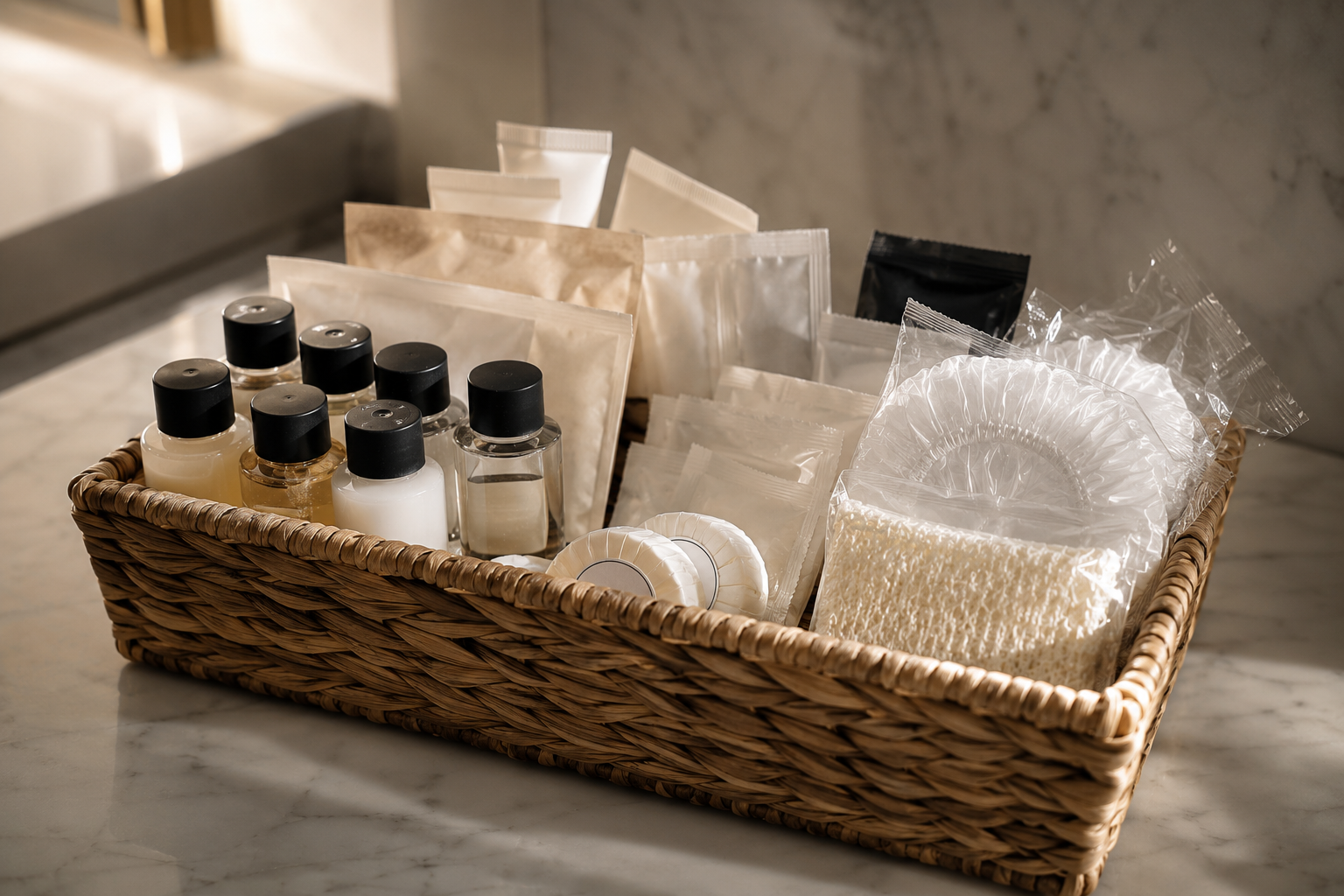
The date going around is wrong, and the error is not trivial. The end of miniature shampoo bottles in European hotel rooms does not begin "in August", nor is it a blanket ban on single-use packaging in tourism. It has a precise date, 1 January 2030, and a legal architecture that deliberately separates plastic from everything else. Anyone who brings the date forward by three and a half years, or treats the rule as a total ban, is not reading the regulation. They are reading a second-hand summary.
What the rule says, and when
The instrument is Regulation (EU) 2025/40, known by the acronym PPWR (Packaging and Packaging Waste Regulation). It entered into force on 11 February 2025 and applies, for the bulk of its provisions, from 12 August 2026. This is where the date confusion is born. August 2026 is the general application date of the regulation, not the date on which amenities vanish from rooms.
The bans on specific formats live in another article, with another timetable. Article 25, which refers to Annex V, only takes effect from 1 January 2030. It is Annex V, point 5, that hits the accommodation sector: it prohibits single-use packaging for cosmetics, hygiene and toiletry products intended for individual use in accommodation. Translated into a hotel's daily reality, it is the end of the disposable little bottle of shampoo, gel and lotion left by the sink.
So three and a half years separate the date the viral posts repeat from the date the law sets. This is not a detail. A hotelier who reorganises operations for August 2026 will be pulling forward a cost with no matching legal obligation. A supplier who promises solutions that are "mandatory now" will be selling manufactured urgency.
The distinction almost nobody mentions: the material
Here is the structural point that separates serious analysis from a rushed paraphrase. Annex V treats two neighbouring cases differently.
For single-serve HORECA sachets (sugar, sauces, jams, coffee creamer served at the table), the ban refers to single-use plastic packaging. The criterion is the material. A sachet that is not plastic escapes, in principle, that specific ban.
For accommodation-sector amenities, the wording is broader. The text refers to single-use packaging, without qualifying the material. The prevailing reading, backed by analysis from the European Parliament itself, is that the ban may also cover non-plastic packaging, depending on the use. That is, in the hotel room, swapping the plastic bottle for a single-use glass or cardboard one may not solve the regulatory problem. What the rule attacks in this case is the disposable single-dose format itself, not merely the polymer.
This asymmetry is the information with value. A buffet could, in theory, migrate from plastic sachets to sachets of another material and remain compliant. A hotel room, probably, cannot. It is the difference between swapping the material and rethinking the logistics.
The exceptions the alarmists leave out
The regulation is not a blind decree. For points 1 to 4 of Annex V, composite packaging with a plastic content of 5% or less by weight is exempt from those specific bans. There are also margins of exception where single use is required for hygiene and safety reasons, with relevance for medical-requirement contexts, and derogations for microenterprises where no viable alternatives exist for food and beverages consumed on the premises. Any narrative that presents the PPWR as a total blackout of single-dose packaging is omitting the engineering of exceptions the legislator built on purpose.
So, is it the end of amenities?
No. It is the end of a format, not of an amenity. From 2030, the European hotel will still offer shampoo, soap and gel. What changes is the mode of delivery. The alternatives are already mapped: fixed refillable dispensers mounted in the shower, products made available on request at reception, reusable packaging inside reuse systems. It is the disposable single-use bottle that leaves the stage.
For hospitality, the correct reading is neither environmental nor moral. It is operational and cost-driven. The migration to dispensers has favourable economies of scale in the medium term, but it demands upfront investment, revision of supply contracts and an adjustment of guest perception, especially in the luxury segment, where the branded miniature functioned as a status signal. It is there, in the tension between regulatory compliance and brand positioning, that the decision gets interesting. And it is there, not in the wrong date of a carousel, that the conversation should be.
What to keep
The PPWR is real and the accommodation sector is affected. But the date is 1 January 2030, not August 2026. The ban on formats lives in Article 25 and Annex V, not in the general application of the regulation. And, in the specific case of hotel amenities, the ban goes beyond plastic, which makes it stricter than the one on buffet sachets. Three facts, three corrections. The difference between repeating a summary and reading the source.
